Introduction
Digital building materials integrate optoelectronic components and lighting-display technology with traditional materials such as stone, wood, cement, metal, and ceramics, creating self-illuminating decorative panels. They retain the original texture and strength while displaying text, images, videos, and interactive content, bringing static materials to life. Users can experience an immersive, “virtual-into-reality” metaverse effect without any wearable devices.
Materials Features
Multiple material options:Covers dozens of building material categories (including stone, wood, metal, concrete, coatings, mother-of-pearl inlay, etc.) to meet diverse aesthetic and functional needs. Specialized models with features such as waterproofing, compression resistance, and high brightness are available for specific application scenarios.
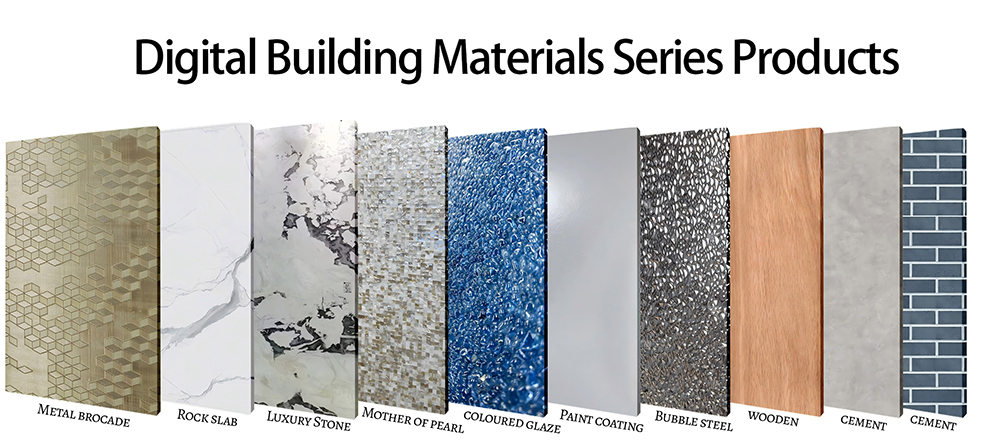
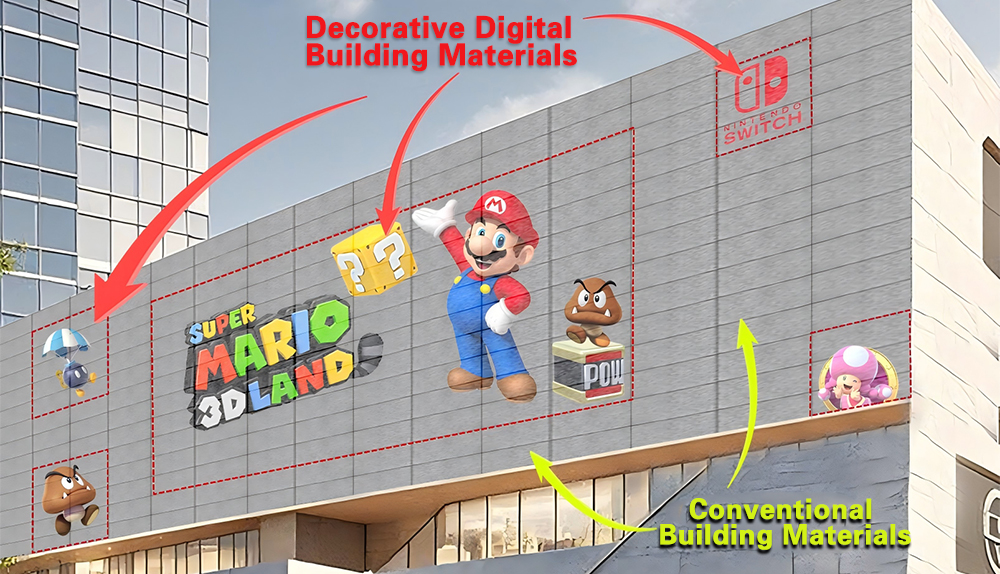
Environment-friendly adaptability: The installation methods and standard dimensions of the digital building material series follow industry standards, allowing seamless integration with traditional construction materials. Suitable for both indoor and outdoor use—applicable on walls, floors, and ceilings—with a brightness range of 200–6000 cd/m².
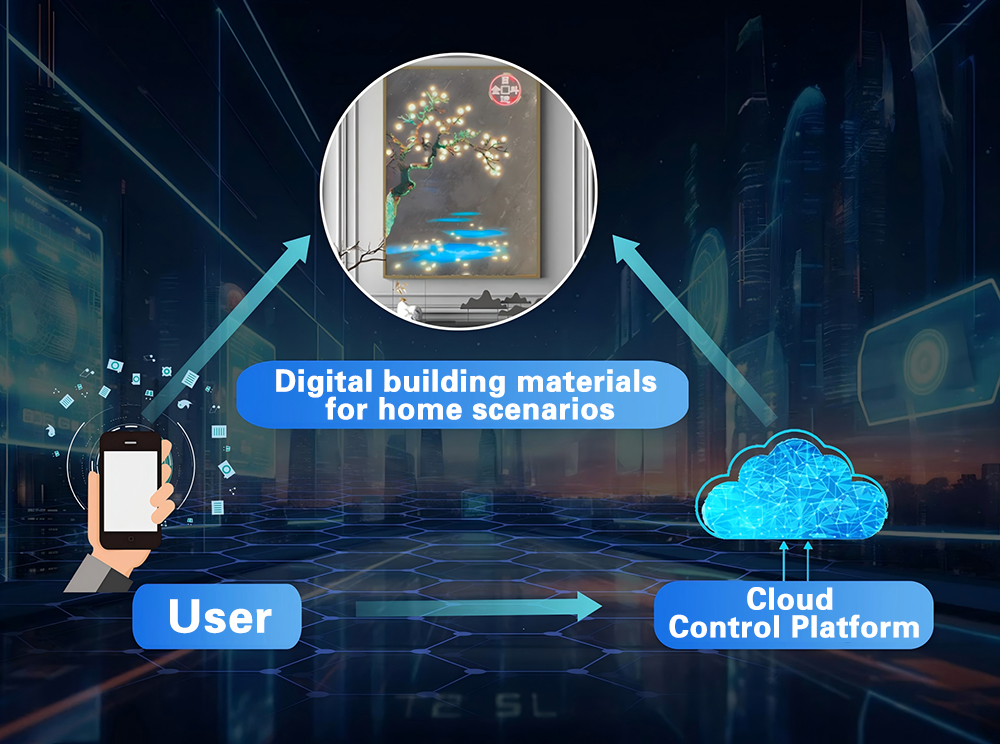
Content-flexible & smart control: Digital building materials seamlessly connect with smart devices, integrating motion interaction and environmental sensing technologies. They intelligently adjust visual content, color rhythms, and lighting based on the scene, creating an interactive space that resonates emotionally with users. With the cloud control platform, full smart management of home environments or public spaces can be achieved. Display content can be flexibly updated to match festivals, seasons, or ambient needs. Supports wired/wireless transmission from computers, mobile phones, and iPads, allowing playback of any content.
Public spaces can use a cloud platform for integrated control of digital building materials, audio, and projection devices, creating a “one-stop” system that can be operated in real time via a tablet.
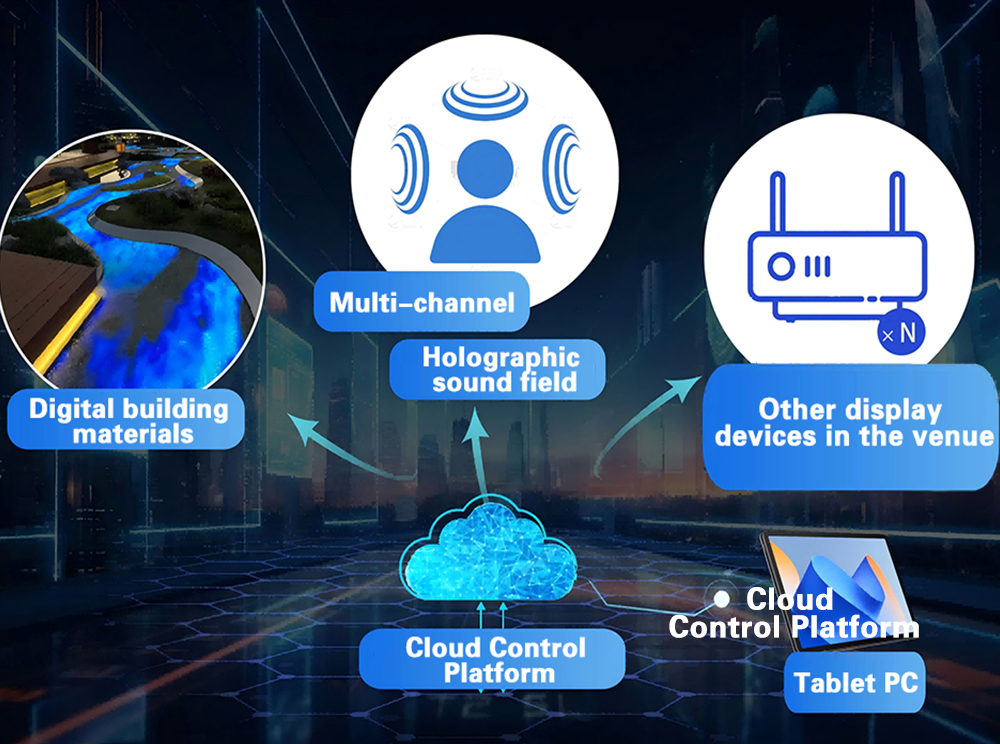
In home settings, users can access the cloud platform via their phones or other devices to freely select and switch animated content—for example, updating digital building materials with a Santa Claus-themed animation for Christmas.
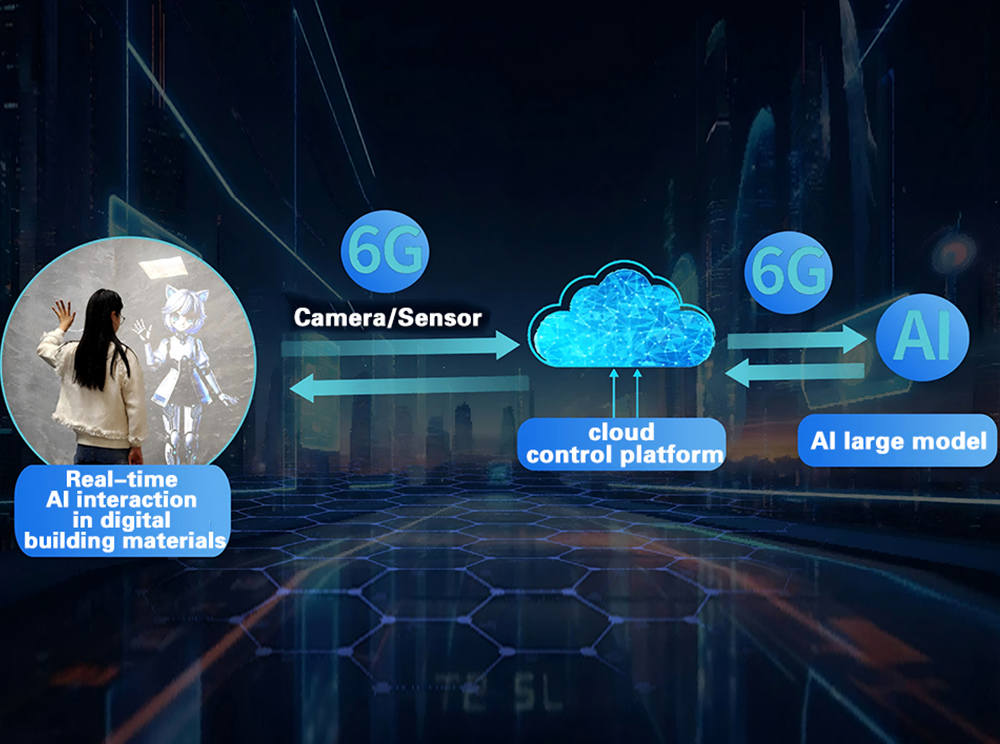
Based on 6G+AI, the cloud platform can receive camera or sensor signals with zero delay, process effects via cloud AI, and instantly return the visuals for real-time, lag-free interactive effects.
Application scenarios
Brand store wall application:
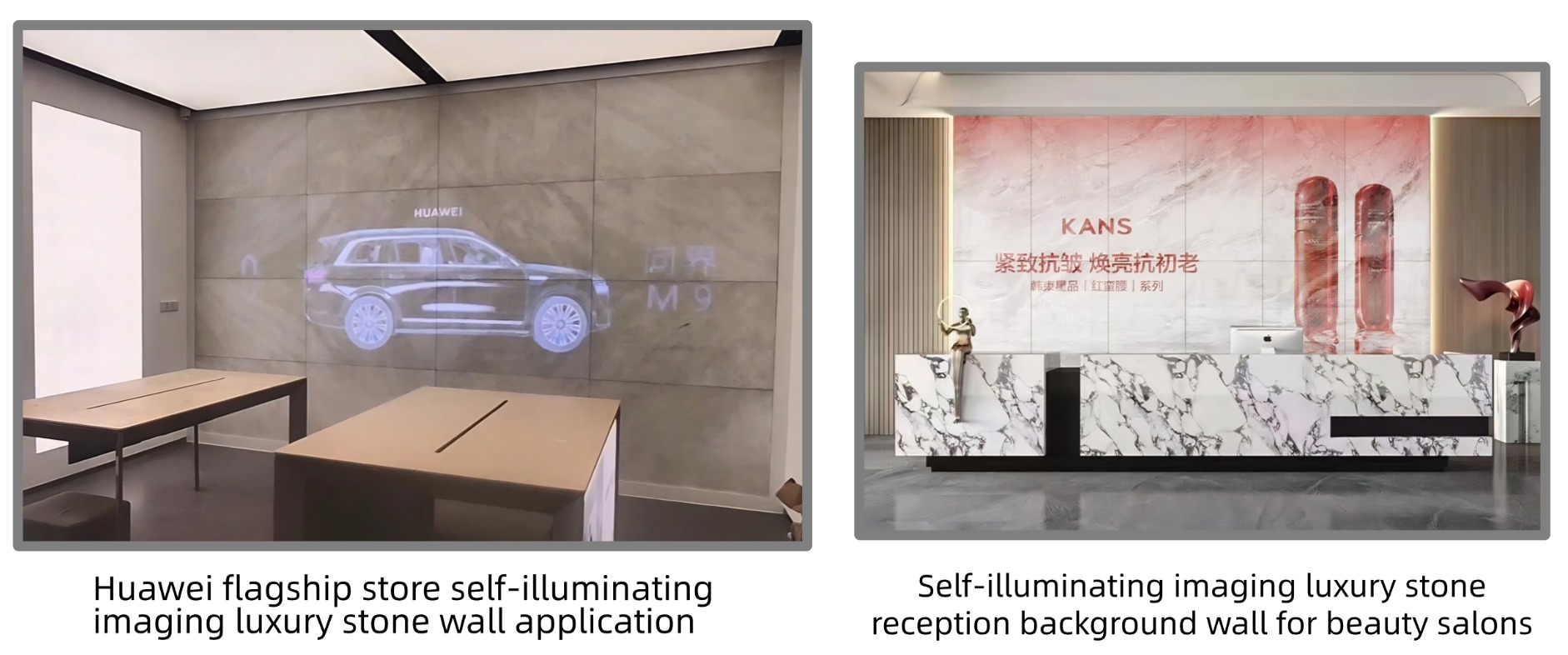
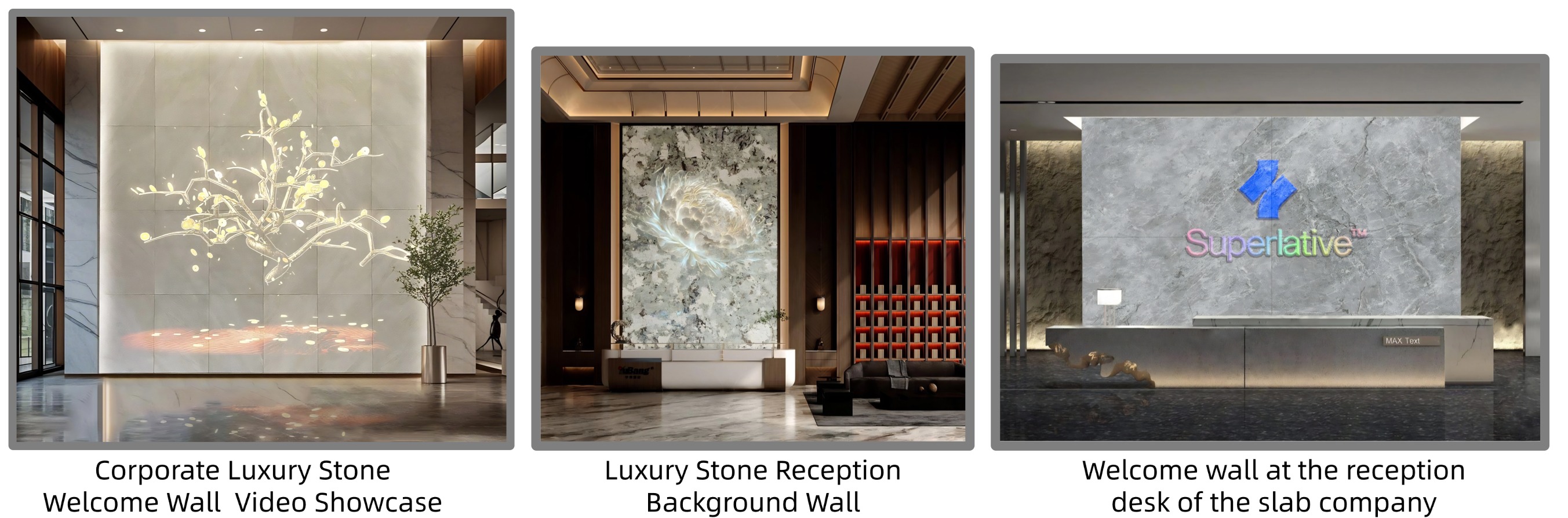
Digital building materials welcome wall application:
Elevator Digital Building Materials Application:
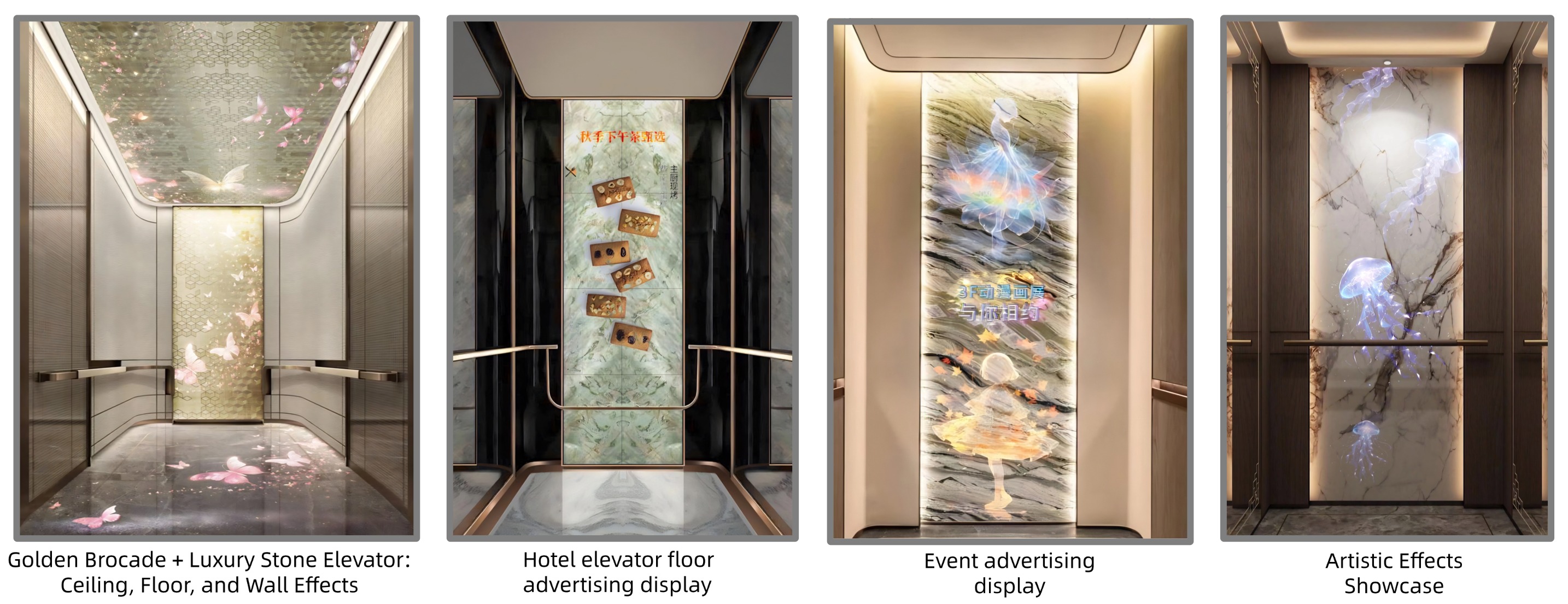
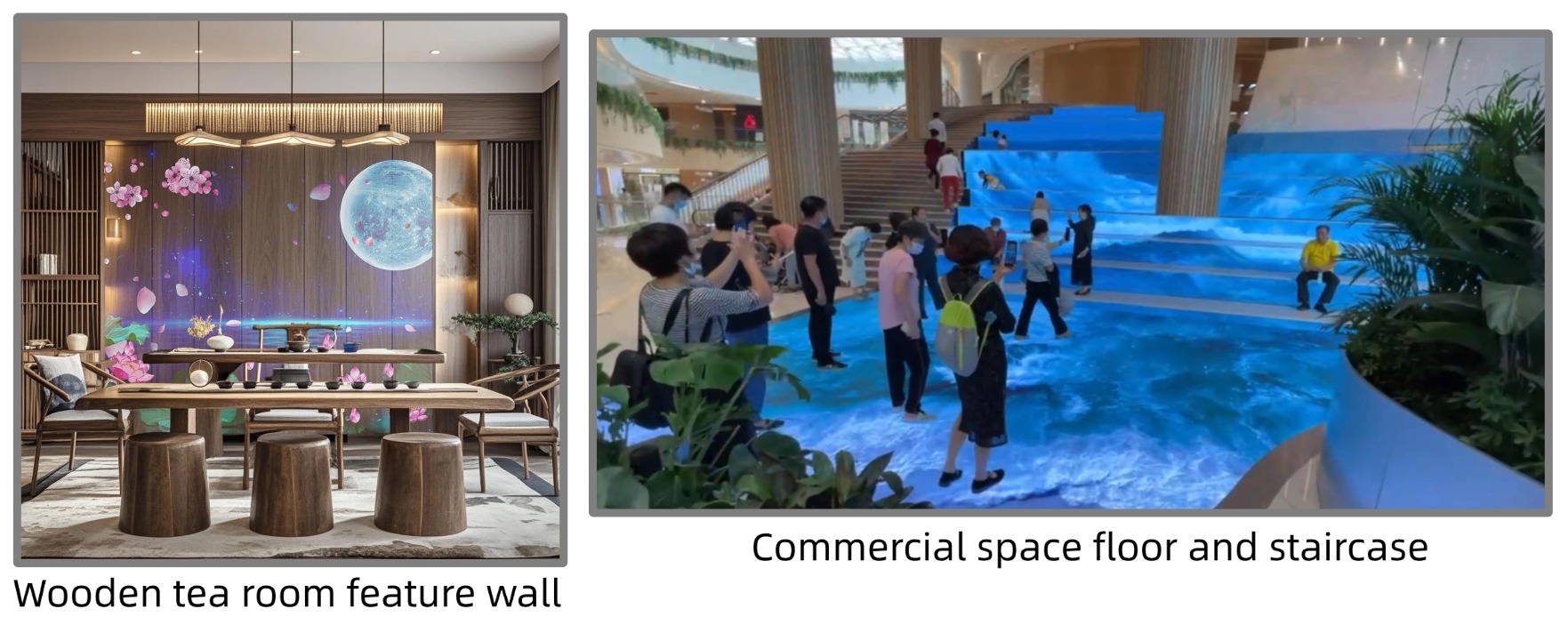
Digital building materials multi-scenario applications:
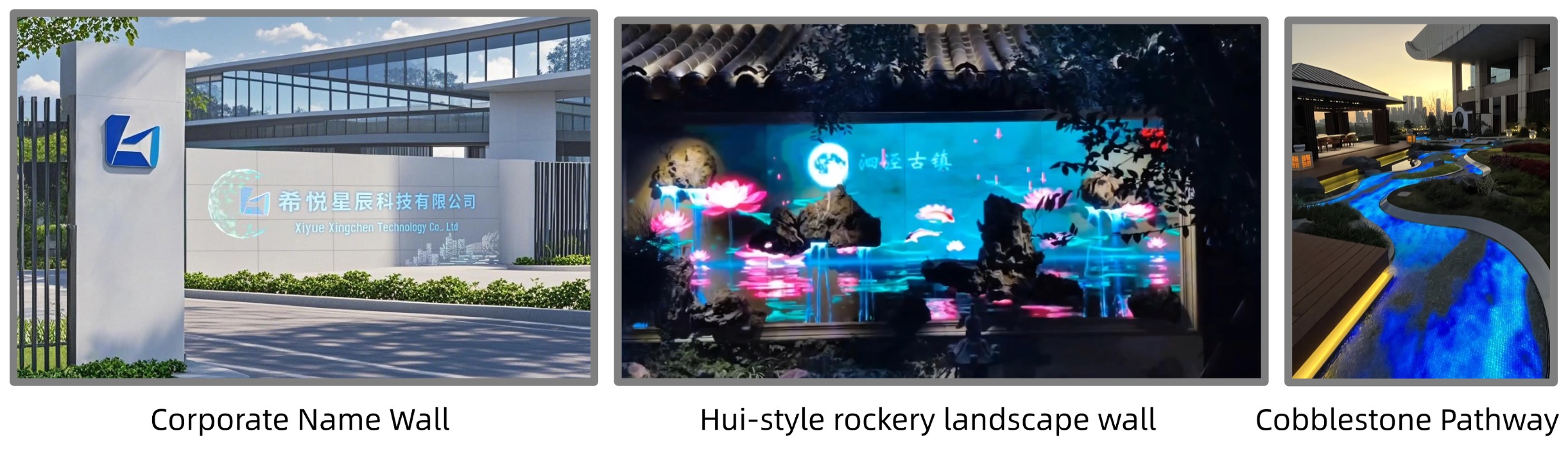
Digital building materials outdoor applications:
Factors affecting pricing
| 1 | Substrate selection: Wood boards, marble, cement, metals, etc. There are significant price differences among different materials. |
| 2 | Size and resolution: Customized according to the provided size and display pixel requirements; the smaller the pixels, the higher the precision. |
| 3 | Pixel pitch: Common indoor types: P2 / P2.5 / P3 / P4; Outdoor (high-brightness) types: P6, P8, P10. The smaller the pixel pitch, the clearer the display and the higher the price. |
| 4 | Brightness: Indoor: 200~500 cd/m²; Outdoor: 3000~6000 cd/m². |
| 5 | Customization process: Special requirements such as patterns, splicing methods, waterproof and pressure-resistant grades, etc. |
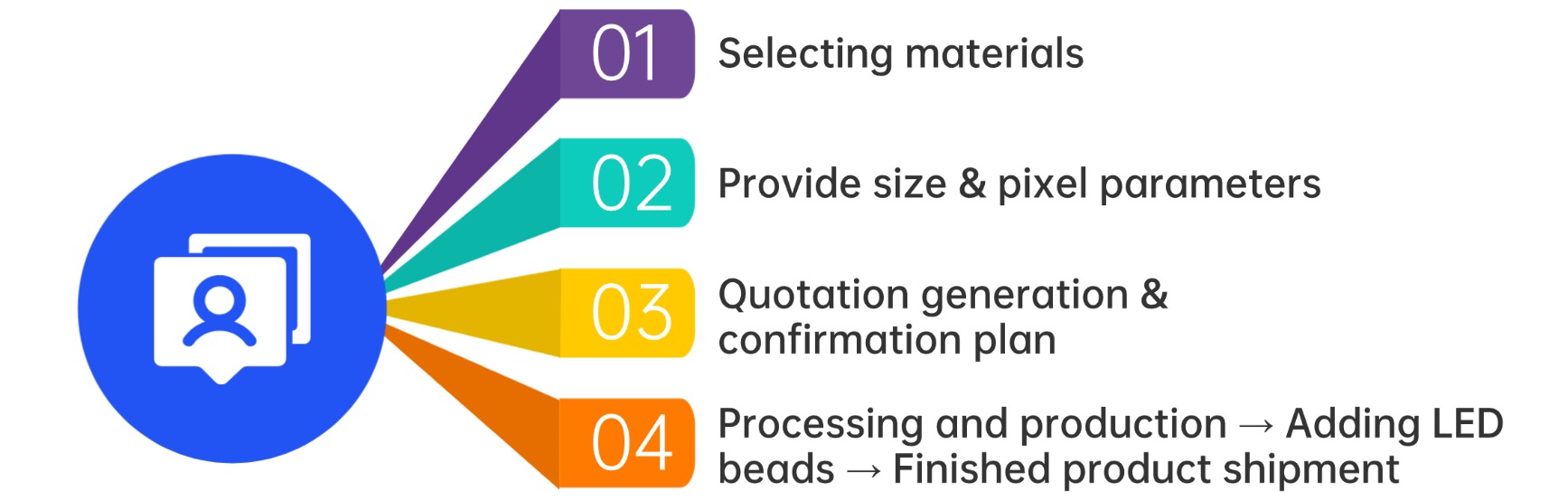
Quotation process

 English